Building AI Agents using CrewAI
18 Sept 2025, 4:30 pm
Last Updated: 2 Dec 2025, 7:00 pm
Author: Satheesh Challa
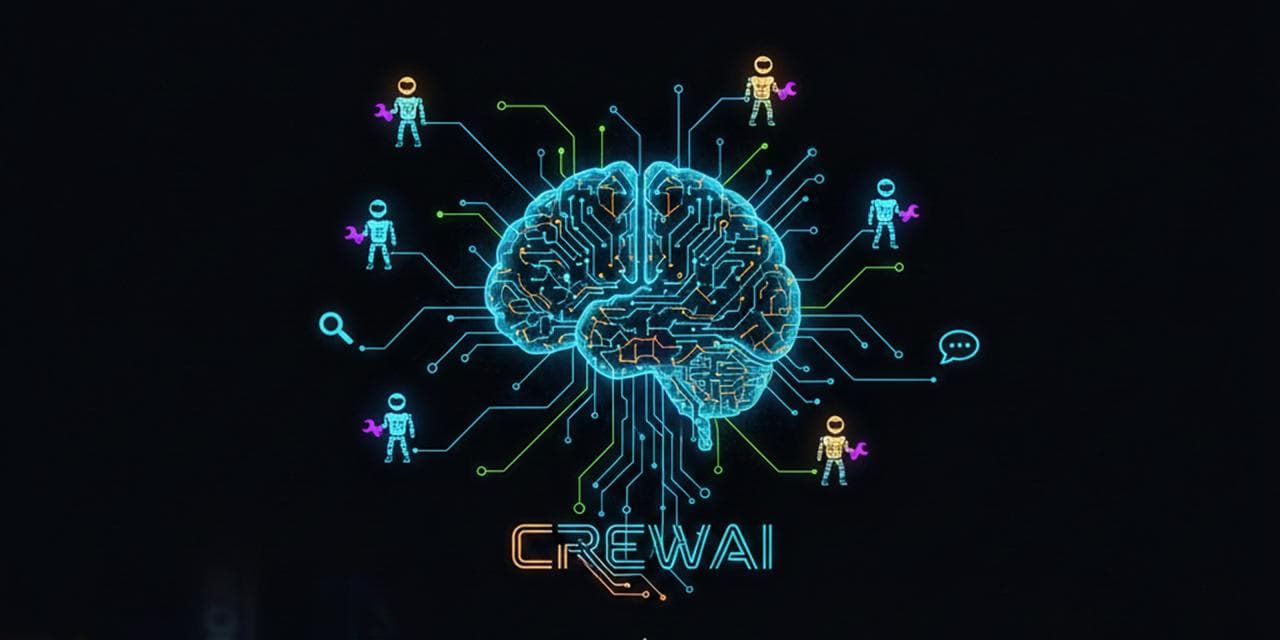
Introduction to CrewAI: The Future of Multi-Agent Systems
CrewAI is revolutionizing how we build AI agent systems by introducing a framework that mirrors human team collaboration. Instead of creating a single monolithic agent trying to handle everything, CrewAI enables you to build teams of specialized agents that work together, each bringing their unique expertise to solve complex problems.
This comprehensive guide will take you from zero to building production-ready AI agent systems with CrewAI. Whether you're automating content creation, building research assistants, or creating complex business workflows, CrewAI provides the tools and abstractions you need to succeed. Let's dive into this powerful framework and learn how to harness the power of collaborative AI agents.
Why CrewAI? Understanding the Problem It Solves
Traditional AI agent frameworks often struggle with complex, multi-faceted tasks. A single agent, no matter how sophisticated, can become overwhelmed when trying to handle research, analysis, writing, and quality control simultaneously. CrewAI recognizes that the solution lies in specialization and collaboration—just like human teams.
Key Problems CrewAI Addresses
- Task Complexity - Breaking down complex tasks into manageable pieces handled by specialized agents, each focused on their area of expertise.
- Quality Consistency - Having dedicated agents for review and quality control ensures consistent, high-quality outputs.
- Parallel Processing - Multiple agents can work on different aspects of a problem simultaneously, dramatically reducing completion time.
- Maintainability - Updating or improving one agent's capabilities doesn't require redesigning the entire system.
- Scalability - Add new agents with specific skills as your requirements grow without disrupting existing workflows.
CrewAI's agent-based approach mirrors successful patterns from software engineering like microservices and separation of concerns. Each agent is a focused unit with a clear responsibility, making systems easier to understand, test, and maintain.

Core Concepts: Understanding CrewAI Architecture
Before building with CrewAI, it's essential to understand its core concepts. The framework revolves around five main components that work together to create powerful multi-agent systems.
The Five Pillars of CrewAI
- Agents - The individual actors in your system. Each agent has a role (like "researcher" or "writer"), a goal (what they're trying to achieve), and a backstory (context that shapes their behavior). Agents use LLMs to make decisions and take actions.
- Tasks - Specific units of work that need to be completed. Tasks have descriptions, expected outputs, and can be assigned to specific agents. They can depend on other tasks, creating workflows.
- Tools - Capabilities that agents can use to accomplish their tasks. Tools can be anything from web search and file operations to custom API integrations and database queries.
- Processes - Define how agents collaborate. CrewAI supports sequential processes (agents work one after another) and hierarchical processes (with a manager agent coordinating others).
- Crews - Collections of agents working together toward a common goal. A crew orchestrates agents, assigns tasks, and manages the overall workflow.
These components are designed to be composable and reusable. You can create a library of specialized agents and tools, then mix and match them to create different crews for different purposes.
CrewAI Components Overview
| S.No | Component | Description | Purpose | ||||
|---|---|---|---|---|---|---|---|
| 1 | Agents | Autonomous entities with specific roles and goals | Perform specialized tasks | Agents Autonomous entities with specific roles and goals Perform specialized tasks | |||
| 2 | Tasks | Defined units of work with expected outputs | Structure agent workloads | Tasks Defined units of work with expected outputs Structure agent workloads | |||
| 3 | Tools | Functions that agents can use to accomplish tasks | Extend agent capabilities | Tools Functions that agents can use to accomplish tasks Extend agent capabilities | |||
| 4 | Processes | Workflows that coordinate agent collaboration | Orchestrate multi-agent work | Processes Workflows that coordinate agent collaboration Orchestrate multi-agent work | |||
| 5 | Crews | Collections of agents working together | Manage agent teams | Crews Collections of agents working together Manage agent teams | |||
Setting Up Your Development Environment
Getting started with CrewAI is straightforward. The framework is built with Python and integrates seamlessly with popular LLM providers like OpenAI, Anthropic, and open-source models through LangChain.
Installation Steps
- Python Requirements - Ensure you have Python 3.10 or higher installed. CrewAI leverages modern Python features for optimal performance.
- Install CrewAI - Use pip to install the CrewAI package along with its dependencies. The framework includes everything you need to get started.
- API Keys - Set up API keys for your chosen LLM provider. OpenAI is the most popular choice, but CrewAI supports multiple providers.
- Optional Tools - Install additional packages for specific tools you plan to use, such as web scraping, database access, or API integrations.
CrewAI follows Python best practices for package management. Consider using virtual environments to isolate your CrewAI projects and manage dependencies cleanly. Tools like poetry or pipenv work well for managing more complex projects.

Creating Your First Agent
Let's build your first CrewAI agent. An agent is more than just an LLM—it's an autonomous entity with personality, goals, and capabilities. The way you define your agent significantly impacts its behavior and effectiveness.
Agent Configuration Parameters
- Role - A concise title that defines what the agent does. Examples: "Senior Research Analyst", "Technical Writer", "Quality Assurance Specialist". The role shapes how the agent approaches tasks.
- Goal - What the agent is trying to achieve. Be specific and measurable. "Find and analyze relevant information about AI trends" is better than "do research".
- Backstory - Context that influences the agent's behavior. This is surprisingly important—a well-crafted backstory helps the LLM understand the agent's perspective and expertise level.
- Tools - List of tools the agent can use. Start simple with basic tools like web search, then add more specialized capabilities as needed.
- Verbose - Enable detailed logging to understand what your agent is doing and thinking. Invaluable during development.
- Allow Delegation - Whether this agent can delegate tasks to other agents. Useful in hierarchical processes.
The art of creating effective agents lies in crafting clear, specific roles and goals. Vague descriptions lead to unpredictable behavior. Think of yourself as a manager hiring a specialist—you need to clearly communicate expectations and provide the right tools for success.
Defining Tasks: The Building Blocks of Work
Tasks are the specific pieces of work that agents need to complete. Well-defined tasks are crucial for agent success. They need to be clear, actionable, and have measurable outcomes.
Task Components
- Description - A clear, detailed explanation of what needs to be done. Include context, requirements, and constraints. The more specific, the better.
- Expected Output - Describe what success looks like. Format requirements, length constraints, and quality criteria help agents produce exactly what you need.
- Agent Assignment - Which agent should handle this task. Match tasks to agents based on their roles and expertise.
- Context - Provide relevant background information or data that the agent needs to complete the task effectively.
- Async Execution - For tasks that can run independently, enable async execution to improve performance.
Tasks can be chained together by passing outputs from one task as context to another. This creates powerful workflows where agents build on each other's work, similar to an assembly line or waterfall process in project management.
Equipping Agents with Tools
Tools extend what agents can do beyond text generation. CrewAI integrates with LangChain's extensive tool ecosystem and allows you to create custom tools for your specific needs.
Built-in and Popular Tools
- Search Tools - Web search capabilities using Google, DuckDuckGo, or custom search APIs. Essential for agents that need current information.
- File Operations - Read and write files, parse documents (PDF, Word, etc.), and manage file systems for document-heavy workflows.
- Web Scraping - Extract structured data from websites. Useful for gathering information from specific sources not covered by search.
- Database Tools - Query databases, retrieve data, and perform analysis. Connect your agents to your data infrastructure.
- API Integration - Call external APIs for specialized functionality like sentiment analysis, translation, or domain-specific services.
- Code Execution - Run Python code safely to perform calculations, data transformations, or complex analysis.
Creating Custom Tools
Custom tools are straightforward to create. You define a Python function with clear parameters and docstrings, then wrap it with CrewAI's tool decorator. The docstring is crucial—the LLM uses it to understand when and how to use the tool.
- Write clear, descriptive docstrings explaining what the tool does
- Use type hints for parameters to help the LLM understand expected inputs
- Handle errors gracefully and return informative messages
- Keep tools focused on single responsibilities
- Test tools independently before giving them to agents
Assembling Your Crew
Once you have agents and tasks defined, it's time to assemble them into a crew. The crew orchestrates everything, managing how agents collaborate and ensuring tasks are completed in the right order.
Crew Configuration
- Agents List - Add all the agents that will be part of this crew. Order matters in sequential processes but less so in hierarchical ones.
- Tasks List - Define the tasks in the order they should be executed. Tasks assigned to specific agents will be routed accordingly.
- Process Type - Choose between Sequential (tasks run one after another) or Hierarchical (a manager agent coordinates work among other agents).
- Verbose Mode - Enable detailed logging to see what's happening at each step. Critical for debugging and understanding agent behavior.
- Memory - Enable memory features so agents can remember information across tasks and even between crew runs.
The choice between sequential and hierarchical processes depends on your use case. Sequential works well for pipelines where each step builds on the previous one. Hierarchical is better when you need dynamic task allocation and coordination.

Real-World Use Case: Content Creation Pipeline
Let's explore a practical example: building a content creation pipeline with CrewAI. This system will have three specialized agents working together to produce high-quality blog posts.
Pipeline Architecture
- Research Agent - Gathers information about the topic using web search and document analysis. Compiles facts, statistics, and expert opinions.
- Writer Agent - Takes research findings and crafts engaging, well-structured content. Focuses on clear communication and compelling narrative.
- Editor Agent - Reviews the draft for grammar, style, fact-checking, and overall quality. Ensures the content meets publication standards.
This pipeline demonstrates key CrewAI patterns: specialization, sequential workflow, and quality control. Each agent focuses on what they do best, resulting in higher quality output than a single agent trying to do everything.
Task Flow
- Task 1: Research the topic thoroughly and compile key findings
- Task 2: Write a comprehensive article based on the research
- Task 3: Edit and refine the article for publication
Advanced Features: Memory and Context
CrewAI includes sophisticated memory systems that allow agents to remember information across tasks and even across different crew runs. This creates more contextually aware and intelligent agents.
Types of Memory
- Short-term Memory - Agents remember information within a single crew execution. Useful for maintaining context across multiple tasks.
- Long-term Memory - Persists information across crew runs. Agents can recall past interactions and build on previous work.
- Entity Memory - Tracks information about specific entities (people, companies, concepts) mentioned across tasks and runs.
Memory features are particularly valuable for conversational agents, research assistants, and any application where maintaining context improves output quality. CrewAI handles memory storage and retrieval automatically, making it easy to build more intelligent systems.
Best Practices for Production Systems
Building demos with CrewAI is straightforward, but production systems require additional considerations for reliability, cost management, and monitoring.
Production Checklist
- Error Handling - Implement comprehensive error handling for API failures, tool errors, and unexpected agent behavior. Have fallback strategies.
- Cost Management - Monitor LLM API usage carefully. Set up alerts for unusual spending and implement rate limiting where appropriate.
- Logging and Monitoring - Log all crew executions, agent decisions, and task outcomes. Use this data to improve your system over time.
- Testing - Create test cases for your crews. Test with various inputs to ensure consistent behavior and catch edge cases.
- Prompt Optimization - Iterate on agent roles, goals, and task descriptions based on real-world usage. Small prompt changes can significantly impact results.
- Caching - Implement caching for expensive operations like web searches or API calls to reduce costs and improve response times.
- Model Selection - Use cheaper models (like GPT-3.5) for simple tasks and reserve expensive models (GPT-4) for complex reasoning.
Common Patterns and Anti-Patterns
Learning from others' experiences can accelerate your CrewAI development. Here are proven patterns and mistakes to avoid.
Effective Patterns
- Pipeline Pattern - Sequential agents each adding value, like research → write → edit. Works well for content creation and analysis.
- Review Pattern - Have a specialized agent review outputs from other agents. Significantly improves quality.
- Specialist Pattern - Create narrow, focused agents rather than generalist agents trying to do everything.
- Coordination Pattern - Use hierarchical processes with a manager agent for complex, dynamic workflows.
Anti-Patterns to Avoid
- Too many agents without clear role differentiation
- Vague task descriptions leading to unpredictable outputs
- Giving agents tools they don't actually need
- Not providing enough context in backstories
- Trying to do too much in a single task
- Neglecting error handling and edge cases
Scaling CrewAI Applications
As your needs grow, you'll want to scale your CrewAI applications. This involves both technical scaling (handling more requests) and organizational scaling (managing more complex agent systems).
Scaling Strategies
- Async Processing - Use async task execution and background job queues for long-running crews. Don't block user interactions.
- Crew Libraries - Build a library of reusable agents and crews. Mix and match components for different use cases.
- Configuration Management - Externalize agent and task configurations. This makes it easy to tune behavior without code changes.
- Observability - Implement comprehensive monitoring, logging, and tracing to understand system behavior at scale.
- Model Optimization - Fine-tune or use specialized models for specific tasks to improve quality and reduce costs.
The Future of CrewAI and Multi-Agent Systems
CrewAI is actively evolving with new features and capabilities being added regularly. The multi-agent paradigm is gaining traction as a more natural and effective way to build complex AI systems.
Emerging Trends
- Better evaluation frameworks for measuring crew performance
- Enhanced collaboration protocols between agents
- Integration with more specialized models and tools
- Improved learning and adaptation from feedback
- Visual interfaces for designing and monitoring crews
- Better support for multi-modal agents (vision, audio)
As LLMs become more capable and cost-effective, multi-agent systems like CrewAI will become the standard approach for building sophisticated AI applications. The framework's focus on specialization and collaboration aligns with how humans naturally organize to solve complex problems.
Conclusion: Building the Future with CrewAI
CrewAI represents a paradigm shift in how we build AI agent systems. By embracing specialization and collaboration, it enables developers to create systems that are more capable, maintainable, and reliable than single-agent approaches.
Starting with CrewAI is straightforward, but mastering it requires understanding how to design effective agents, craft clear tasks, and orchestrate collaboration. The patterns and best practices outlined in this guide will help you avoid common pitfalls and build production-ready systems.
Whether you're automating content creation, building research assistants, or creating complex business workflows, CrewAI provides the tools and abstractions you need. Start with simple crews, learn from real-world usage, and gradually build more sophisticated multi-agent systems. The future of AI development is collaborative, and CrewAI puts that power in your hands today.
Similar Blogs
What is an AI Agent and How to Build One
Understand AI agent architecture, learn how autonomous systems make decisions, and follow practical steps to build intelligent agents using LLM frameworks.
Top 5 Frameworks for Building AI agents
Review the top 5 AI agent frameworks: LangChain, CrewAI, AutoGPT, Semantic Kernel, and LlamaIndex. Compare features, strengths, and ideal use cases.
Cost Optimization Strategies for AWS
Cut AWS cloud costs with proven optimization strategies: EC2 right-sizing, Reserved & Spot Instances, S3 storage management, auto-scaling, and Savings Plans.