Top 5 Frameworks for Building AI agents
10 Sept 2025, 2:30 pm
Last Updated: 20 Nov 2025, 9:00 pm
Author: Satheesh Challa
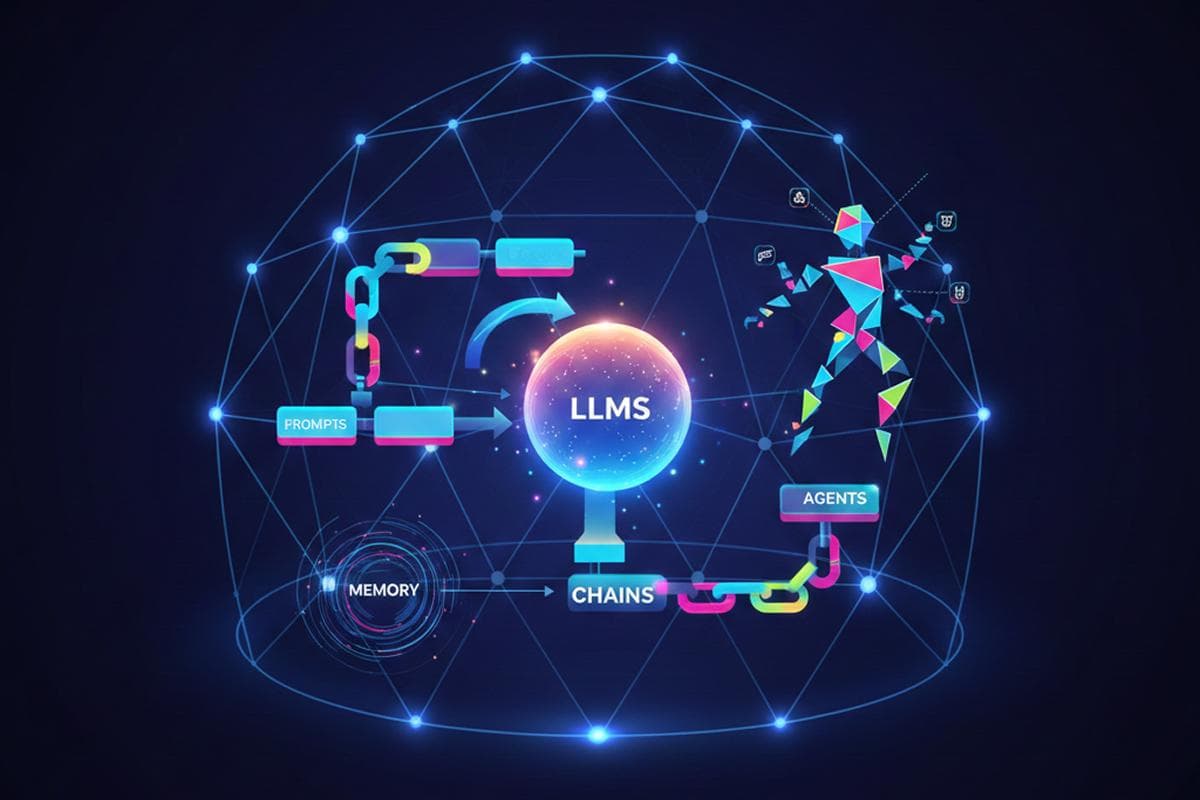
The Rise of AI Agents in Modern Development
AI agents have transformed from science fiction concepts into practical tools that developers use daily. These intelligent systems can understand context, make decisions, and execute complex tasks autonomously. As the AI landscape evolves rapidly, choosing the right framework for building AI agents has become crucial for developers and organizations looking to leverage this technology.
In this comprehensive guide, we'll explore the top five frameworks that are shaping the future of AI agent development. Whether you're building chatbots, autonomous systems, or complex multi-agent workflows, understanding these frameworks will help you make informed decisions for your projects.
What Are AI Agents and Why Do They Matter?
AI agents are software programs that can perceive their environment, make decisions, and take actions to achieve specific goals. Unlike traditional software that follows predefined rules, AI agents can learn, adapt, and handle ambiguous situations using large language models (LLMs) and other AI technologies.
Key Characteristics of AI Agents
- Autonomy - Agents can operate independently with minimal human intervention, making decisions based on their programming and learned experiences.
- Reasoning Capability - Using LLMs, agents can understand complex instructions, break down problems, and formulate solutions.
- Tool Usage - Modern AI agents can use external tools, APIs, and databases to gather information and execute actions.
- Memory Management - Agents maintain context through conversations and can recall relevant information for better decision-making.
- Goal-Oriented Behavior - Agents work towards specific objectives, planning and executing steps to achieve desired outcomes.
The demand for AI agents is growing across industries. From customer service and content creation to data analysis and software development, AI agents are automating complex tasks that previously required human intelligence. This revolution is made possible by frameworks that simplify agent development and provide robust tooling for building production-ready systems.
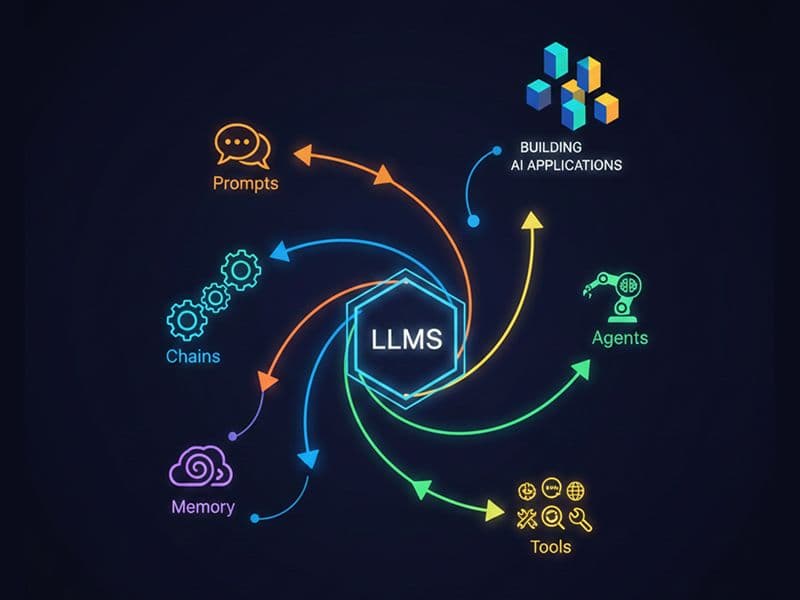
1. LangChain: The Pioneer in Agent Development
LangChain has emerged as one of the most popular frameworks for building AI applications. Created to simplify the development of applications powered by large language models, LangChain provides a comprehensive toolkit for creating sophisticated AI agents with minimal boilerplate code.
Core Features of LangChain
- Chains - Compose multiple LLM calls and actions into sequential workflows. LangChain's chain abstraction allows you to build complex pipelines by connecting simple components.
- Agents and Tools - Built-in agent types that can use various tools like search engines, calculators, and custom APIs. Agents can reason about which tools to use and when.
- Memory - Multiple memory implementations including conversation buffer, summary memory, and vector store memory for maintaining context across interactions.
- Prompt Templates - Reusable prompt structures that make it easy to generate consistent, well-formatted prompts for your LLMs.
- Model Agnostic - Support for multiple LLM providers including OpenAI, Anthropic, Hugging Face, and many others.
- Document Loaders - Easy integration with various data sources including PDFs, websites, databases, and more.
LangChain's ecosystem has grown tremendously with LangServe for deployment, LangSmith for debugging and monitoring, and an extensive library of integrations. The framework's Python implementation is mature and well-documented, with a JavaScript/TypeScript version (LangChain.js) gaining traction for web applications.
Best Use Cases for LangChain
- Question-answering systems over custom documents
- Chatbots with memory and tool usage capabilities
- Complex workflows requiring multiple LLM calls
- RAG (Retrieval Augmented Generation) applications
- Data analysis and transformation pipelines
2. AutoGPT: Pioneering Autonomous Agents
AutoGPT took the world by storm as one of the first frameworks to demonstrate truly autonomous AI behavior. It leverages GPT-4's capabilities to break down complex goals into subtasks, execute them, and learn from the results. AutoGPT's approach inspired many subsequent frameworks and changed how developers think about AI agent autonomy.
What Makes AutoGPT Special
- Task Decomposition - Automatically breaks down high-level goals into manageable subtasks, creating a plan to achieve the objective.
- Self-Critique - Reviews its own actions and outputs, adjusting strategies based on feedback and results.
- Internet Access - Can search the web, gather information, and use online resources to complete tasks.
- Code Execution - Writes and executes code to accomplish programming tasks or data manipulation.
- Long-term Memory - Stores information across sessions using vector databases for better context retention.
While AutoGPT showed incredible promise, developers should be aware of its limitations. The autonomous nature can lead to unexpected behaviors, high API costs, and the need for careful monitoring. However, it remains an excellent framework for experimentation and understanding the capabilities of autonomous agents.
Ideal Applications for AutoGPT
- Research and information gathering tasks
- Content creation and summarization
- Automated testing and quality assurance
- Market research and competitive analysis
- Personal assistant applications
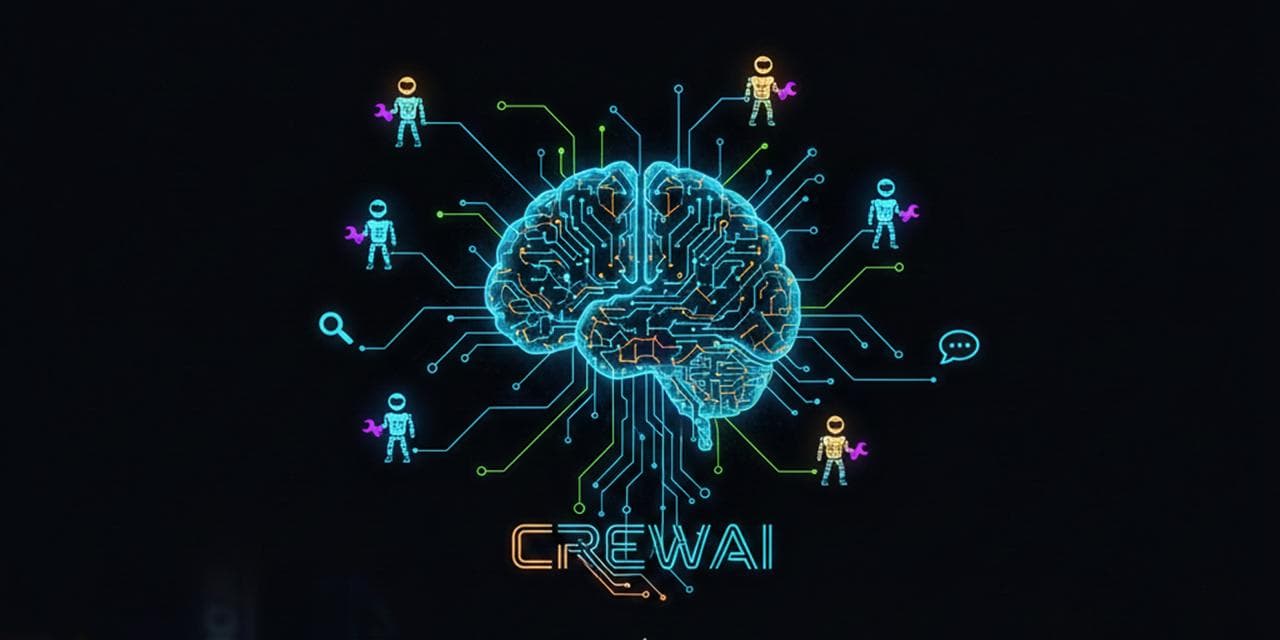
3. CrewAI: Multi-Agent Collaboration Made Easy
CrewAI introduces a novel approach to AI agent development by focusing on multi-agent collaboration. Inspired by how human teams work together, CrewAI allows you to create multiple specialized agents that collaborate to achieve complex goals. This framework is particularly powerful for tasks that benefit from different perspectives and specialized skills.
Key Concepts in CrewAI
- Agents with Roles - Each agent has a specific role, backstory, and goal, similar to team members in an organization. This specialization leads to better results for complex tasks.
- Tasks and Delegation - Define clear tasks with expected outputs. Agents can delegate subtasks to other agents based on their expertise.
- Processes - Choose between sequential or hierarchical processes to define how agents collaborate and share information.
- Tools Integration - Equip agents with specific tools they need for their roles, from web search to data analysis capabilities.
- Memory and Context - Agents maintain short-term, long-term, and entity memory to work more effectively together.
CrewAI's strength lies in its simplicity and powerful abstractions. You can create sophisticated multi-agent systems with relatively little code. The framework handles agent communication, task management, and result aggregation, allowing you to focus on defining your agents and their objectives.
Where CrewAI Excels
- Content creation pipelines with research, writing, and editing agents
- Complex analysis requiring multiple perspectives
- Software development workflows with planning, coding, and testing agents
- Business process automation with specialized roles
- Educational applications with tutor and assistant agents
4. Microsoft Semantic Kernel: Enterprise-Grade AI Development
Microsoft's Semantic Kernel brings enterprise-level robustness to AI agent development. Designed to integrate seamlessly with existing Microsoft ecosystems while remaining open and extensible, Semantic Kernel is ideal for organizations building production-ready AI applications.
Semantic Kernel Features
- Semantic Functions - Natural language prompts that can be parameterized and composed like traditional functions. This allows for intuitive prompt engineering.
- Native Functions - Easily integrate traditional code with AI capabilities, allowing seamless interop between AI and conventional programming.
- Planners - Automatic planning capabilities that can generate and execute plans to achieve goals using available functions.
- Memory and Connectors - Built-in support for vector databases and various data sources for enhanced context and retrieval.
- Multi-Language Support - First-class support for both C# and Python, with consistent APIs across languages.
- Enterprise Integration - Seamless integration with Azure services, Microsoft 365, and other enterprise systems.
Semantic Kernel's architecture is built with scalability, security, and maintainability in mind. It follows software engineering best practices and provides excellent testing and debugging capabilities. For enterprises already invested in the Microsoft ecosystem, Semantic Kernel offers a natural path to AI integration.
Best Suited For
- Enterprise applications requiring robust governance
- Integration with Microsoft 365 and Azure services
- Applications where C# is the primary language
- Systems requiring strong typing and compile-time checks
- Complex business logic mixed with AI capabilities
Framework Comparison Overview
| S.No | Framework | Languages | Best For | Learning Curve | |||||
|---|---|---|---|---|---|---|---|---|---|
| 1 | LangChain | Python, TypeScript | Complex chains, LLM integration | Moderate | LangChain Python, TypeScript Complex chains, LLM integration Learning: Moderate | ||||
| 2 | AutoGPT | Python | Autonomous task execution | Easy | AutoGPT Python Autonomous task execution Learning: Easy | ||||
| 3 | CrewAI | Python | Multi-agent collaboration | Moderate | CrewAI Python Multi-agent collaboration Learning: Moderate | ||||
| 4 | Microsoft Semantic Kernel | C#, Python | Enterprise integration | Moderate to Hard | Microsoft Semantic Kernel C#, Python Enterprise integration Learning: Moderate to Hard | ||||
| 5 | LlamaIndex | Python | Data indexing and retrieval | Easy to Moderate | LlamaIndex Python Data indexing and retrieval Learning: Easy to Moderate | ||||
5. LlamaIndex: Mastering Data for AI Agents
LlamaIndex (formerly GPT Index) specializes in data integration and retrieval for AI applications. While it can be used for building agents, its primary strength lies in creating sophisticated data pipelines that enable AI systems to work with custom data sources effectively.
LlamaIndex Capabilities
- Data Connectors - Over 100 data connectors for various sources including databases, APIs, PDFs, and more. Easily ingest data from anywhere.
- Indexing Strategies - Multiple indexing methods including vector stores, keyword indices, and knowledge graphs for optimal retrieval.
- Query Engines - Sophisticated query processing that can handle complex questions across multiple data sources.
- Agent Tools - Convert indices into tools that agents can use, enabling data-driven decision making.
- Advanced RAG - Implements cutting-edge Retrieval Augmented Generation techniques for better context and accuracy.
- Evaluation Framework - Built-in tools for evaluating retrieval quality and answer relevance.
LlamaIndex shines when your AI agents need to work with large amounts of custom data. It's particularly valuable for building knowledge bases, documentation search systems, and any application where accurate retrieval of relevant information is critical. The framework can be used standalone or integrated with other frameworks like LangChain.
Perfect Use Cases
- Enterprise knowledge bases and documentation systems
- Customer support with access to product information
- Research assistants working with scientific papers
- Legal and compliance applications with document analysis
- Financial analysis with real-time data integration
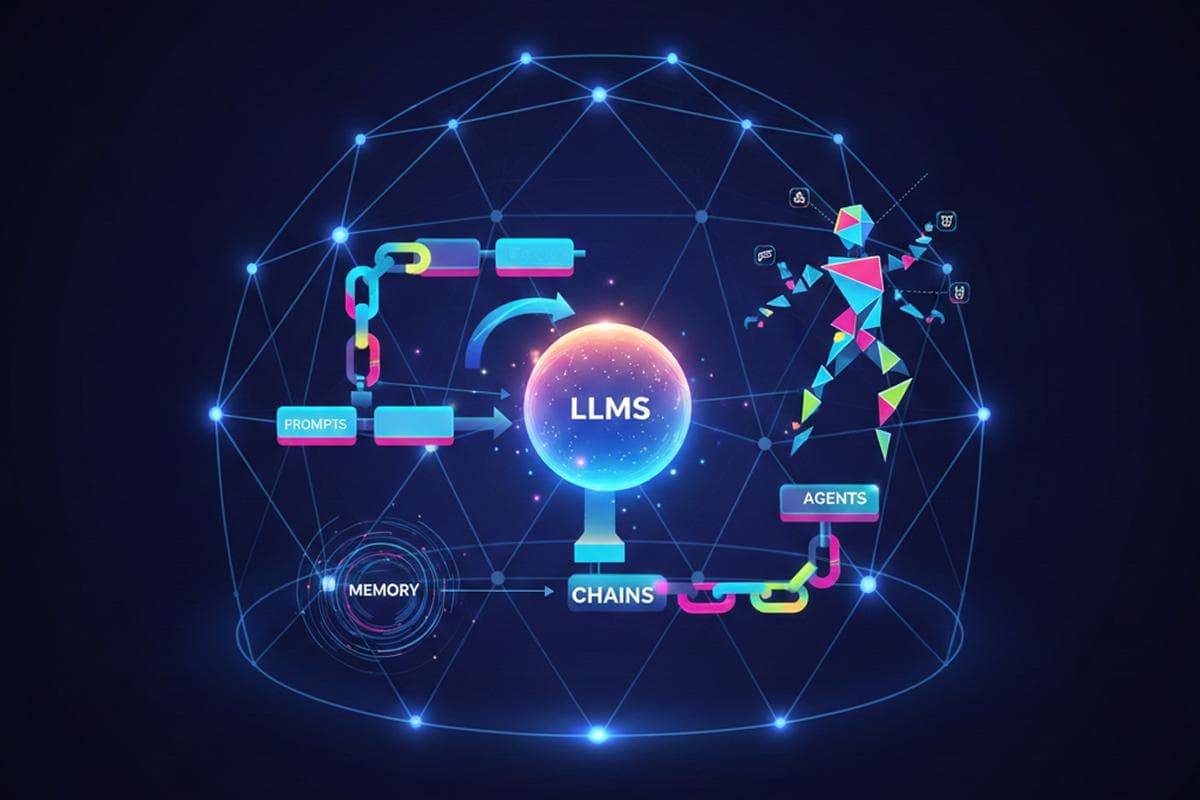
Choosing the Right Framework for Your Project
Selecting the appropriate framework depends on several factors including your use case, technical requirements, team expertise, and scalability needs. Here's a decision framework to help you choose.
Decision Criteria
- Project Complexity - For simple applications, start with LangChain or LlamaIndex. For complex multi-agent systems, consider CrewAI. For autonomous behavior, explore AutoGPT.
- Data Requirements - If your application is heavily data-driven with custom sources, LlamaIndex should be a primary consideration.
- Enterprise Needs - For enterprise applications, Microsoft Semantic Kernel offers robust integration, security, and support.
- Team Skills - Consider your team's existing expertise. Python developers might prefer LangChain or CrewAI, while .NET teams would benefit from Semantic Kernel.
- Community and Support - LangChain has the largest community and most extensive documentation, which can accelerate development.
Best Practices for Building AI Agents
Regardless of which framework you choose, following best practices ensures your AI agents are reliable, maintainable, and cost-effective.
Essential Best Practices
- Start Simple - Begin with basic functionality and gradually add complexity. Test thoroughly at each stage.
- Implement Guardrails - Set boundaries on what your agents can do, including timeouts, cost limits, and action restrictions.
- Monitor and Log - Implement comprehensive logging to understand agent behavior and debug issues quickly.
- Optimize Prompts - Invest time in prompt engineering. Clear, well-structured prompts lead to better agent performance.
- Manage Costs - Implement caching, use cheaper models where appropriate, and monitor API usage carefully.
- Test Extensively - Create comprehensive test suites including edge cases and failure scenarios.
- Version Control - Track changes to prompts, agent configurations, and tool definitions systematically.
The Future of AI Agent Frameworks
The AI agent ecosystem is evolving rapidly. We're seeing convergence in some areas and specialization in others. Future developments will likely focus on improved reliability, better testing tools, enhanced multi-modal capabilities, and more sophisticated reasoning.
Emerging Trends
- Better evaluation and benchmarking tools for agent performance
- Improved memory systems for long-running agents
- Enhanced multi-modal capabilities (vision, audio, etc.)
- Standardization of agent communication protocols
- Better integration between frameworks
- Focus on interpretability and explainability
- Advanced planning and reasoning capabilities
Staying informed about these developments will help you make better architectural decisions and prepare for future capabilities. Follow framework updates, participate in communities, and experiment with new features as they're released.
Conclusion: Empowering Your AI Journey
The frameworks we've explored represent the cutting edge of AI agent development. Each brings unique strengths to the table, from LangChain's comprehensive toolkit to CrewAI's multi-agent collaboration, AutoGPT's autonomy, Semantic Kernel's enterprise focus, and LlamaIndex's data mastery.
The key to success is matching the framework to your specific needs rather than chasing the latest trends. Start with a clear understanding of your requirements, prototype with one or two frameworks, and make an informed decision based on real-world testing.
As AI technology continues to advance, these frameworks will evolve and new ones will emerge. By understanding the fundamentals and best practices outlined in this guide, you'll be well-equipped to build powerful AI agents that deliver real value. The future of software development is increasingly agent-driven, and now is the perfect time to start building.
Similar Blogs
What is an AI Agent and How to Build One
Understand AI agent architecture, learn how autonomous systems make decisions, and follow practical steps to build intelligent agents using LLM frameworks.
Top 5 Frameworks for Building AI agents
Review the top 5 AI agent frameworks: LangChain, CrewAI, AutoGPT, Semantic Kernel, and LlamaIndex. Compare features, strengths, and ideal use cases.

Cost Optimization Strategies for AWS
Cut AWS cloud costs with proven optimization strategies: EC2 right-sizing, Reserved & Spot Instances, S3 storage management, auto-scaling, and Savings Plans.